


Introduction
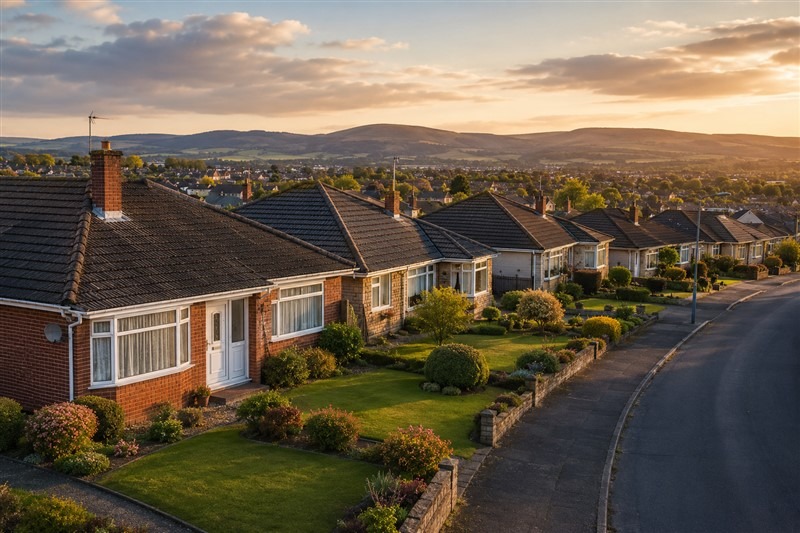
For decades, the bungalow occupied a unique place within Britain’s housing market. Offering practical single-storey living, private outdoor space, and accessibility for people of all ages, bungalows were once a common feature of towns, villages, and suburban developments across the country.
Today, however, Britain faces what many property professionals describe as a growing bungalow crisis. Demand for single-storey homes continues to rise, particularly among older homeowners and downsizers, yet the supply of new bungalows remains extremely limited. In many areas, competition for existing stock is intense, driving prices higher and reducing mobility throughout the housing market.
This shortage has implications far beyond retirement living. It affects housing supply, family home availability, healthcare costs, community sustainability, and the ability of older residents to remain independent for longer.
As Britain’s population ages and pressure on the housing market increases, the question is becoming more urgent: why are so few bungalows being built, and what can be done to address the shortage?
Understanding Britain’s Bungalow Crisis
The UK’s housing debate is often dominated by discussions around affordability, planning reform, and housing targets. Yet the lack of suitable housing for older people receives far less attention despite its growing importance.
Bungalows occupy a small proportion of Britain’s housing stock. While exact figures vary by region, industry estimates suggest that only a small percentage of new homes built annually are single-storey properties. Many major housebuilders focus predominantly on two-storey family homes and apartment developments because they maximise development density and profitability.
This creates a significant mismatch between supply and demand.
Britain’s population is ageing rapidly. Millions of people are now entering retirement age, and many own larger family homes that no longer suit their needs. Stairs can become increasingly difficult with age, maintenance requirements can become burdensome, and accessibility becomes a greater priority.
At the same time, many older homeowners wish to remain within their existing communities. They want to stay close to family, friends, healthcare services, and local amenities. A bungalow often represents the ideal solution.
Unfortunately, suitable options are frequently unavailable.
The result is that many people remain in larger properties longer than they otherwise would. While this may seem like a personal choice, it has wider consequences for the housing market. Family homes remain occupied by households that might otherwise move, reducing the supply available to younger families seeking more space.
The bungalow shortage, therefore, affects housing chains throughout the market.
Why Demand for Bungalows Continues to Grow
An Ageing Population
One of the most significant drivers behind Britain’s bungalow crisis is demographic change.
The UK is experiencing a substantial increase in the number of older residents. Improvements in healthcare and living standards mean people are living longer than previous generations. While this is undoubtedly positive, it also creates new housing challenges.
Many existing homes were not designed with later-life living in mind. Features such as stairs, narrow doorways, split-level layouts, and inaccessible bathrooms can become problematic as mobility changes.
Single-storey living removes many of these challenges. Bungalows offer ease of movement, reduced maintenance requirements, and greater adaptability for future needs.
The Rise of Downsizing
Downsizing has become an increasingly common consideration among homeowners approaching retirement.
Many people reach a stage where they no longer require four-bedroom detached houses with large gardens. However, downsizing does not necessarily mean sacrificing quality of life.
A well-designed bungalow can provide comfortable accommodation, manageable maintenance responsibilities, and continued independence.
The challenge is finding suitable options.
In many parts of the country, attractive bungalows are in extremely short supply. This limited availability often pushes prices higher, making downsizing less financially attractive than many homeowners expect.
Accessibility and Future-Proofing
Modern housing discussions increasingly focus on future-proofing properties.
A bungalow naturally provides many accessibility benefits that can be expensive to retrofit into multi-storey homes. Level access, wider circulation spaces, and step-free living can help residents remain independent for longer while reducing reliance on costly adaptations.
As awareness of accessible housing grows, demand for single-storey properties is likely to increase further.
Comparing Bungalows with Other Property Types
The popularity of bungalows can be better understood when compared with alternative housing options.
| Property Type | Accessibility | Maintenance Requirements | Downsizer Appeal | Development Density |
|---|---|---|---|---|
| Bungalow | Excellent | Low to Moderate | Very High | Low |
| Detached House | Moderate | High | Moderate | Moderate |
| Semi-Detached House | Moderate | Moderate | Moderate | Moderate |
| Terraced House | Variable | Moderate | Low to Moderate | High |
| Apartment | High (with lift) | Low | High | Very High |
The table highlights a key challenge. While bungalows score highly for accessibility and downsizer appeal, they provide lower development density than other housing forms.
This density issue is one of the primary reasons many developers favour alternative property types.
Why Developers Build So Few Bungalows
Land Economics
Land values play a crucial role in development decisions.
Developers operate within commercial realities. In areas where land is expensive, building single-storey homes may not generate the same financial returns as constructing multiple two-storey houses or apartment blocks on the same site.
A developer who can build twenty family homes on a parcel of land may struggle to justify building ten bungalows instead.
This economic reality significantly influences housing delivery across the country.
Planning Policy Pressures
Local authorities face pressure to meet housing targets while making efficient use of land.
Planning policies often encourage higher-density development, particularly in urban areas. While this approach can increase housing numbers, it may unintentionally discourage bungalow construction.
As a result, many planning applications prioritise density over diversity of housing types.
Misconceptions About Demand
Some developers continue to view bungalows as a niche product aimed solely at older buyers.
In reality, demand extends far beyond retirees. Single-storey homes appeal to people with disabilities, young families seeking practical layouts, and homeowners planning for long-term accessibility.
Greater recognition of this broader demand could encourage more diverse housing delivery.
Britain’s Bungalow Crisis: The Numbers Behind the Shortage
| Property Type | Approximate Share of UK Housing Stock | Estimated Number of Properties | Typical Share of New-Build Completions |
|---|---|---|---|
| Detached Houses | ~22% | ~6.3 million | ~20–25% |
| Semi-Detached Houses | ~31% | ~8.8 million | ~25–30% |
| Terraced Houses | ~24% | ~6.8 million | ~20–25% |
| Flats & Apartments | ~15% | ~4.3 million | ~20–30% |
| Bungalows | ~7–8% | ~1.8 million (England) | ~1.0–1.2% |
| Other Property Types | ~1–2% | ~0.5 million | Variable |
Research found there were approximately 1.8 million bungalows in England, accounting for 7.6% of the housing stock, while bungalows represented only 1.2% of all new-build completions in recent years.
Historic Decline in Bungalow Construction
This table is even more powerful for illustrating the crisis:
| Year | Bungalows as a Percentage of New-Build Completions |
|---|---|
| 1990 | ~11% |
| 2000 | ~6.9% |
| 2010 | ~2–3% (estimated) |
| 2020 | ~1.2% |
| 2024 | ~1% |
| 2025 | ~1% |
The data shows that bungalow construction has effectively collapsed over the past three decades. In 1990, roughly one in every nine new homes built in Britain was a bungalow. Today, it is closer to one in every hundred.
Key Statistic
| Bungalow Crisis Fact | Figure |
|---|---|
| Bungalows in England | ~1.8 million |
| Share of Housing Stock | 7.6% |
| Share of New-Build Completions | 1.2% |
| New Bungalows Built in 2020 | 1,833 |
| Downsizers as Share of Property Moves | ~33% |
| Homeowners Aged 55+ Who Abandoned Moving Plans | 1.2 million |
The Wider Impact on the UK Housing Market
The bungalow shortage affects far more than the retirement housing sector.
When older homeowners cannot find suitable properties to move into, larger family homes remain occupied for longer periods. This reduces market fluidity and limits opportunities for younger households seeking additional space.
A more balanced supply of bungalows could improve housing mobility across multiple market segments.
The issue also has implications for healthcare and social care systems.
Research consistently shows that suitable housing can help older people maintain independence and reduce the likelihood of accidents such as falls. Homes designed for accessibility can support healthier ageing and potentially reduce pressure on public services.
Furthermore, providing attractive downsizing options can strengthen local communities by allowing residents to remain close to established support networks.
Potential Solutions to Britain’s Bungalow Crisis
Encouraging More Diverse Housing Delivery
A greater variety of housing types is needed within new developments.
Rather than focusing exclusively on housing numbers, policymakers and developers could place greater emphasis on housing suitability and demographic needs.
Including more bungalows within residential schemes would help address unmet demand while creating more balanced communities.
Planning Incentives
Local authorities could explore planning incentives that encourage the delivery of accessible housing.
Such measures might include flexible density requirements, streamlined approval processes, or specific policies supporting age-friendly development.
Innovative Bungalow Design
Modern bungalows are very different from the stereotypes often associated with them.
Contemporary designs can incorporate energy efficiency, attractive architecture, flexible layouts, and sustainable building materials. By embracing innovation, developers can create highly desirable homes that appeal to a broad range of buyers.
Recognising Housing Needs Beyond Numbers
Housing policy often focuses on the quantity of homes delivered. While increasing supply is important, the type of housing being built matters equally.
A housing market that fails to provide suitable accommodation for older residents creates inefficiencies throughout the entire system.
Addressing Britain’s bungalow crisis requires a broader understanding of housing demand and demographic change.
Conclusion
Britain’s bungalow crisis represents one of the most overlooked challenges facing the UK housing market. Demand for accessible, single-storey homes continues to grow, yet new supply remains limited.
The consequences extend beyond retirement living. The shortage affects housing mobility, family home availability, healthcare outcomes, and community stability.
As the population ages, the need for appropriate housing will become increasingly important. Bungalows offer a practical, attractive, and future-proof solution for many households, yet they remain underrepresented in new housing developments.
Solving the crisis will require cooperation between developers, planners, policymakers, and the wider property industry. More importantly, it will require recognition that successful housing policy is not simply about building more homes, but building the right homes for the people who need them.
Britain’s housing future depends not only on quantity, but on choice, accessibility, and suitability. The humble bungalow may have a far more important role to play than many realise.