


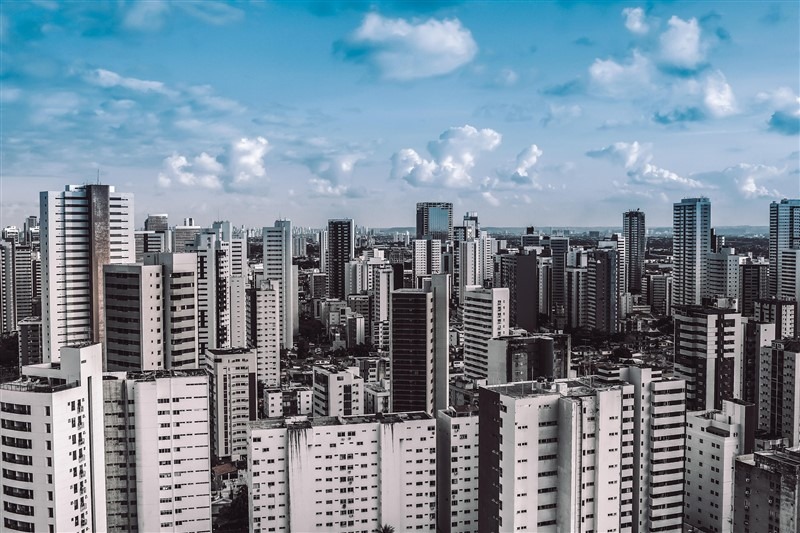
Introduction: The True Scale of the Global Real Estate Market
Real estate is often discussed in terms of local housing prices, investment returns, or commercial development activity. However, this perspective significantly underestimates the true scale of the industry.
In reality, real estate is one of the largest and most important asset classes in the world, forming the foundation of global wealth. It is not a niche sector or a single industry, but a vast interconnected system that underpins every economy on the planet.
Every individual, business, and government interacts with real estate in some form. Whether through homeownership, rental markets, commercial space, infrastructure, or land ownership, property is embedded into daily life and economic activity.
To understand the opportunity within the real estate sector, it is essential to first understand its scale.
Real Estate as a Global Store of Wealth
At its core, real estate represents one of the largest stores of wealth globally. Residential, commercial, industrial, and land assets collectively account for hundreds of trillions of dollars in value.
Unlike many other asset classes, real estate is both essential and universal. People require housing, businesses require operational space, and governments require land and infrastructure to function.
This creates a unique combination of necessity and investment potential that ensures constant demand across all economic conditions.
Real estate is also deeply embedded within financial systems. Property is used as collateral for lending, as a long-term investment vehicle, and as a primary mechanism for wealth preservation across generations.
As a result, real estate is not just an economic sector — it is a structural foundation of global financial stability.
The Four Core Pillars of Global Real Estate Wealth
Real estate is not a single asset class. It is made up of multiple distinct categories, each contributing to global wealth creation.
1. Residential Property
Residential real estate includes houses, apartments, and housing developments. It represents the largest share of global property value and is the primary store of wealth for individuals and families.
2. Commercial Property
Commercial real estate includes office buildings, retail spaces, hotels, and mixed-use developments. It supports employment, business activity, and economic productivity.
3. Industrial Property
Industrial assets include warehouses, logistics centres, factories, and distribution hubs. This segment has grown significantly due to global trade expansion and e-commerce growth.
4. Land and Agricultural Assets
Land ownership, including agricultural land and undeveloped plots, represents a long-term store of value and strategic investment asset across both developed and emerging markets.
Global Breakdown of Real Estate Wealth
The table below provides a simplified overview of the major categories that contribute to global real estate value:
| Real Estate Category | Description | Economic Role | Global Importance |
|---|---|---|---|
| Residential Property | Homes, apartments, housing developments | Primary living accommodation and wealth storage | Largest segment of global real estate value |
| Commercial Property | Offices, retail, hospitality, mixed-use | Supports business activity and employment | Multi-trillion-dollar global sector |
| Industrial Property | Warehouses, factories, logistics hubs | Enables global supply chains and trade | Rapidly expanding due to e-commerce growth |
| Land & Agricultural Assets | Farmland, undeveloped land, rural holdings | Food production and long-term investment | Critical long-term wealth store |
| Infrastructure-Linked Real Estate | Airports, transport hubs, utilities assets | Supports national infrastructure systems | Strategically important institutional asset |
Collectively, these categories form the backbone of global property wealth and economic infrastructure.
Why Real Estate Dominates Global Wealth Allocation
Real estate consistently ranks among the largest asset classes globally because it combines several unique characteristics:
- It is tangible and limited in supply
- It provides both income and capital growth potential
- It is essential for living and working
- It is widely used as a hedge against inflation
- It is deeply integrated into financial systems
Unlike equities or commodities, real estate is not purely speculative. It serves a functional purpose in society, which strengthens its long-term value proposition.
Real Estate and Economic Stability
Real estate plays a central role in economic stability. Property markets influence:
- Banking and lending systems
- Consumer wealth and spending behaviour
- Construction and employment levels
- Government tax revenues
- Infrastructure development
Because of this, changes in the property market often have wider economic implications. Housing cycles, interest rate movements, and credit availability all feed directly into broader economic performance.
This interdependence reinforces the importance of real estate as a foundational asset class within global economies.
The Scale of the Supporting Industry Ecosystem
Beyond physical assets, real estate supports a vast ecosystem of related industries, including:
- Financial services and mortgage lending
- Legal and conveyancing services
- Construction and development
- Architecture and planning
- Property marketing and media
- Technology and PropTech platforms
- Investment advisory services
Each of these sectors generates significant economic activity in its own right, all connected through the underlying property market.
This creates a multiplier effect where the true size of the real estate economy extends far beyond property transactions alone.
Global Real Estate TAM + Ecosystem Breakdown
| Layer | Segment | What It Includes | Estimated Scale | Economic Role |
|---|---|---|---|---|
| 1. Core Asset Base | Residential Real Estate | Homes, apartments, housing stock | ~$200–250 trillion (global value) | Primary store of household wealth |
| 1. Core Asset Base | Commercial Real Estate | Offices, retail, hotels, mixed-use | ~$40–60 trillion (global value) | Business infrastructure and income-producing assets |
| 1. Core Asset Base | Land & Agricultural Assets | Farmland, undeveloped land, rural holdings | Included within broader estimates (~$300–400T total) | Long-term strategic wealth storage |
| TOTAL CORE ASSET CLASS | Global Real Estate Stock | Combined global property value | ~$300–400+ trillion | Largest global store of wealth |
| Layer | Segment | What It Includes | Estimated Annual Scale | Economic Role |
|---|---|---|---|---|
| 2. Transaction & Income Flows | Property Sales | Residential + commercial transactions | Part of ~$10–20T annual flows | Ownership transfer and capital movement |
| 2. Transaction & Income Flows | Rental Markets | Residential + commercial leasing | Major global recurring income stream | Ongoing cash flow from property assets |
| 2. Transaction & Income Flows | Mortgage & Lending Activity | New loans, refinancing, credit markets | Trillions annually | Enables liquidity and purchasing power |
| 2. Transaction & Income Flows | Development Activity | Construction of new property | Multi-trillion-dollar annual output | Expands global housing and commercial stock |
| TOTAL FLOW ECONOMY | Real Estate Market Activity | Combined annual activity | ~$10–20+ trillion per year | Annual economic movement of property capital |
| Layer | Segment | What It Includes | Estimated Annual Scale | Economic Role |
|---|---|---|---|---|
| 3. Ecosystem Industries (Off-Spins) | Financial Services | Mortgages, banking, REITs, investment funds | Multi-trillion-dollar global sector | Capital allocation and financing |
| 3. Ecosystem Industries (Off-Spins) | Professional Services | Legal, surveying, valuation, consulting | Multi-trillion-dollar global sector | Enables transactions and compliance |
| 3. Ecosystem Industries (Off-Spins) | Construction & Development Supply Chain | Builders, materials, engineering | Massive global industrial sector | Physical delivery of real estate assets |
| 3. Ecosystem Industries (Off-Spins) | PropTech & Technology | Platforms, data, AI tools, listings systems | Rapidly growing multi-billion to trillion-scale sector | Digital infrastructure of real estate |
| 3. Ecosystem Industries (Off-Spins) | Media, Marketing & Knowledge Platforms | Real estate media, PR, interviews, education | Smaller but high-margin niche sector | Controls visibility, authority, and influence |
| TOTAL ECOSYSTEM ECONOMY | Real Estate-Linked Industries | Combined supporting industries | ~$30–60+ trillion annual activity (broad estimate) | Entire supporting economy around real estate |
Fragmentation Across Global Markets
Despite its size, real estate remains highly fragmented.
Markets differ across regions due to:
- Local planning regulations
- Tax systems and ownership laws
- Economic cycles and demand drivers
- Cultural differences in housing and investment
- Relationship-driven transactions
Unlike global technology or finance industries, real estate does not operate under a single unified system. Instead, it consists of thousands of local markets operating independently.
This fragmentation has significant implications for information flow, knowledge sharing, and professional visibility.
Why Fragmentation Creates Opportunity
Fragmentation often creates inefficiencies in information access. In real estate, this is particularly evident in the lack of centralised, trusted knowledge platforms.
As a result:
- Information is inconsistent
- Expertise is scattered
- Market insights are often localised
- Professionals rely heavily on networks and experience
This creates a structural opportunity for platforms that can organise, structure, and distribute real-world expertise across the industry.
Conclusion: The Real Estate Opportunity Is Built on Scale and Fragmentation
The global real estate industry is one of the largest and most influential economic systems in the world. Its scale is defined not only by property values but by the extensive network of industries and services that depend on it.
At the same time, its fragmented nature creates complexity but also opportunity.
Understanding both the size and structure of the real estate market is essential for anyone operating within it.
For businesses, investors, and professionals alike, real estate represents not just an asset class — but an entire global ecosystem of opportunity.